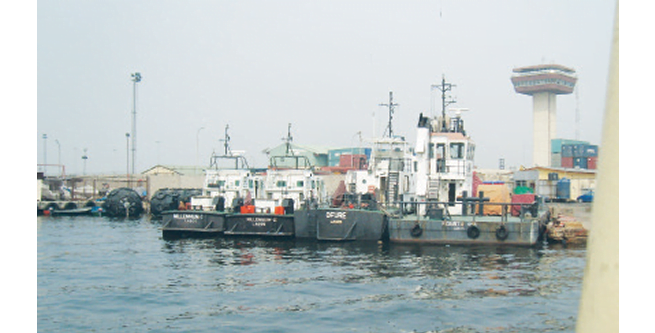
Government agencies and stakeholders in the maritime industry have moved against the enactment of a maritime security bill currently before the National Assembly on the ground that its provisions are mere duplication of the functions of Nigerian Maritime Administration and Safety Agency (NIMASA). BAYO AKOMOLAFE reports
Seven years after it was withdrawn from the National Assembly, the controversial Maritime Security Bill 2017 has suffered another setback following stiff opposition by the government agencies and maritime stakeholders.
The genesis
The bill was traced to the Presidential Implementation Committee on Maritime Safety and Security (PISCOMSS).
Objectives of the bill
Others are to interface with the operations and the activities of security organs of state in the discharge of its functions; monitor, regulate and co-ordinate maritime-related communication between persons, objects or craft within Nigerian maritime environment; assist in search and rescue operations of all agencies and organisations and provide security information on oil and gas pipelines, rigs, platforms and all other established or anchored under water, over ground or any other similar or related forms of installation among others.
Those in favour of the bill said that the agency would curb maritime theft, piracy, robbery and other illegal activities on the nation’s waters.
He believed that Nigeria was on the verge of getting it right in securing her maritime environment as soon as the bill is passed into law.
According to him, seafarers are tired of the kidnap/loss of lives of their colleagues at almost every attack on vessels at sea by sea robbers/pirates since 2008 and had decided to pursue a bill for the establishment of MASECA.
He added that the MASECA bill, sponsored by Hon. Ntufam Etta Mbora, would be a para-military organisation that will train and provide arms for its officers sufficiently to meet the asymmetric threats of criminals.
They argued that it would bring confusion into the industry.
At a public hearing organised by the House of Representatives Committee on Maritime Safety, Education and Administration and chaired by Hon. Umar Mohammed Bago, some stakeholders gave reasons why the bill should not be passed into law by the legislators.
For instance, the Minister of Transportation, Rotimi Amaechi, said that the MASECA Bill should not be passed into law, explaining that it would create another burden on the finances of the Federal Government and also stultify the growth of the shipping sector.
Amaechi noted that the agency was well structured with a reservoir of expertise to manage, supervise and protect the maritime industry.
The Director General, NIMASA, Dr. Dakuku Peterside, also said in Lagos during the 2018 half year maritime forecast review that creating additional agencies in the maritime sector would only overburden the sector.
He explained that what needed to be done was to strengthen the existing ones for optimum service delivery, adding that there were already complaints by ship owners that it was only in Nigeria that too many agencies were interfacing directly with vessels calling at the nation’s ports.
Also, a former Director General of the agency, Temisan Omatseye, warned against enactment of the MASECA Bill into law, saying it will create more problems for both the maritime industry and security agencies.
He explained that at various times, the MASECA Bill had come up and died in the National Assembly in the past.
On his part, the Chairman, Port Consultative Forum, Otunba Kunle Folarin, said that since maritime business was international, if the bill should be passed into law for any reason, it would make Nigeria a laughing stock before the comity of maritime nations.
Source : newtelegraphonline