This threat assessment has been written by EU NAVFOR and Combined Maritime Forces (CMF). It is intended to inform risk management decision making for shipping operators responsible for merchant vessels that are transiting through the Red Sea, Gulf of Aden (GoA), Gulf of Oman (GoO) and the Western Indian Ocean. The report also communicates the latest Piracy Threat Assessment to the Contact Group for Piracy off the Coast of Somalia (CGPCS).
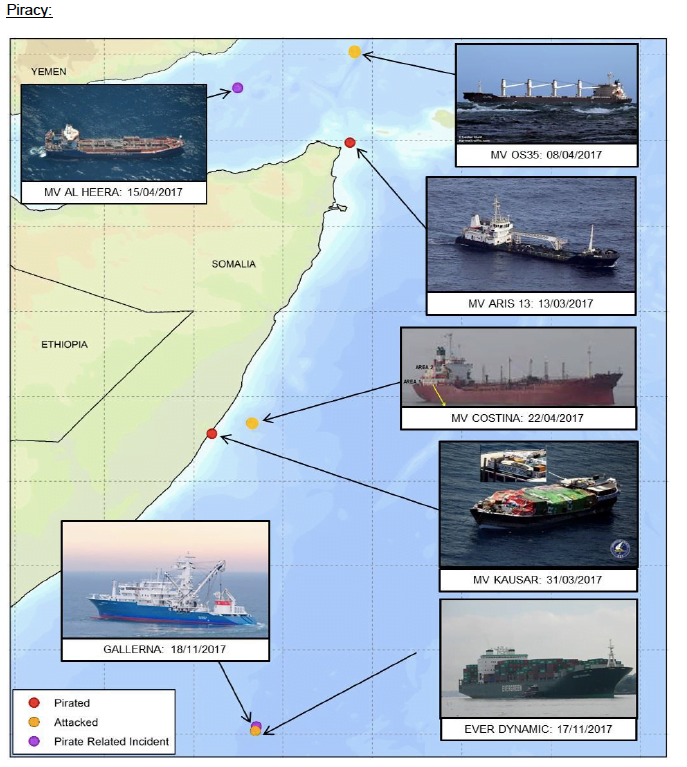
The effective implementation of BMP, the carriage of PAST, and the continued presence of international naval forces in the Area of Operations serves to suppress piracy activity. Despite this, recent incidents serve to highlight that piracy is not eradicated. It is assessed that piracy networks are (at present) meeting their financial objectives by pursuing lower risk, lower reward activities such as the smuggling of people, narcotics, weapons or charcoal; the high risk, high investment, high reward model for piracy is currently unlikely to be deemed attractive or viable for these groups. Therefore, it is assessed that piracy attacks will likely remain sporadic and at a low level. The role of military counter piracy organisations such as CMF and EU NAVFOR, together with the application of BMP and PAST, remain pivotal in creating these conditions.
The most significant evolutions since the last IRTA have occurred in the Southern Red Sea, linked to the ongoing conflict in Yemen. It is worth noting that the use of mines and WBIED has been seen previously and as such does not constitute an escalation or extension of the threat to commercial shipping. However, the risk of miscalculation or collateral damage remains. CMF and EU NAVFOR strongly recommend that the maritime industry continues to implement BMP and the carriage of PAST, along with utilizing the MSTC and registering with MSCHOA / UKMTO; this combination of good practice continues to be the best form of protection. Finally, all parties are reminded that timely and accurate reporting from shipping are vital. This enables both the response to any given incident, and the development and maintenance of an understanding of the threat environment. Cooperation between military and maritime industry stakeholders remains pivotal to the future success of Counter Piracy and the wider Maritime Security effort protecting the free flow of commerce.
Source: 20180228-irtb-004-(irta-1-mar-18)-v3-0-eu-navfor-cmf